
Municipal Policy Platform
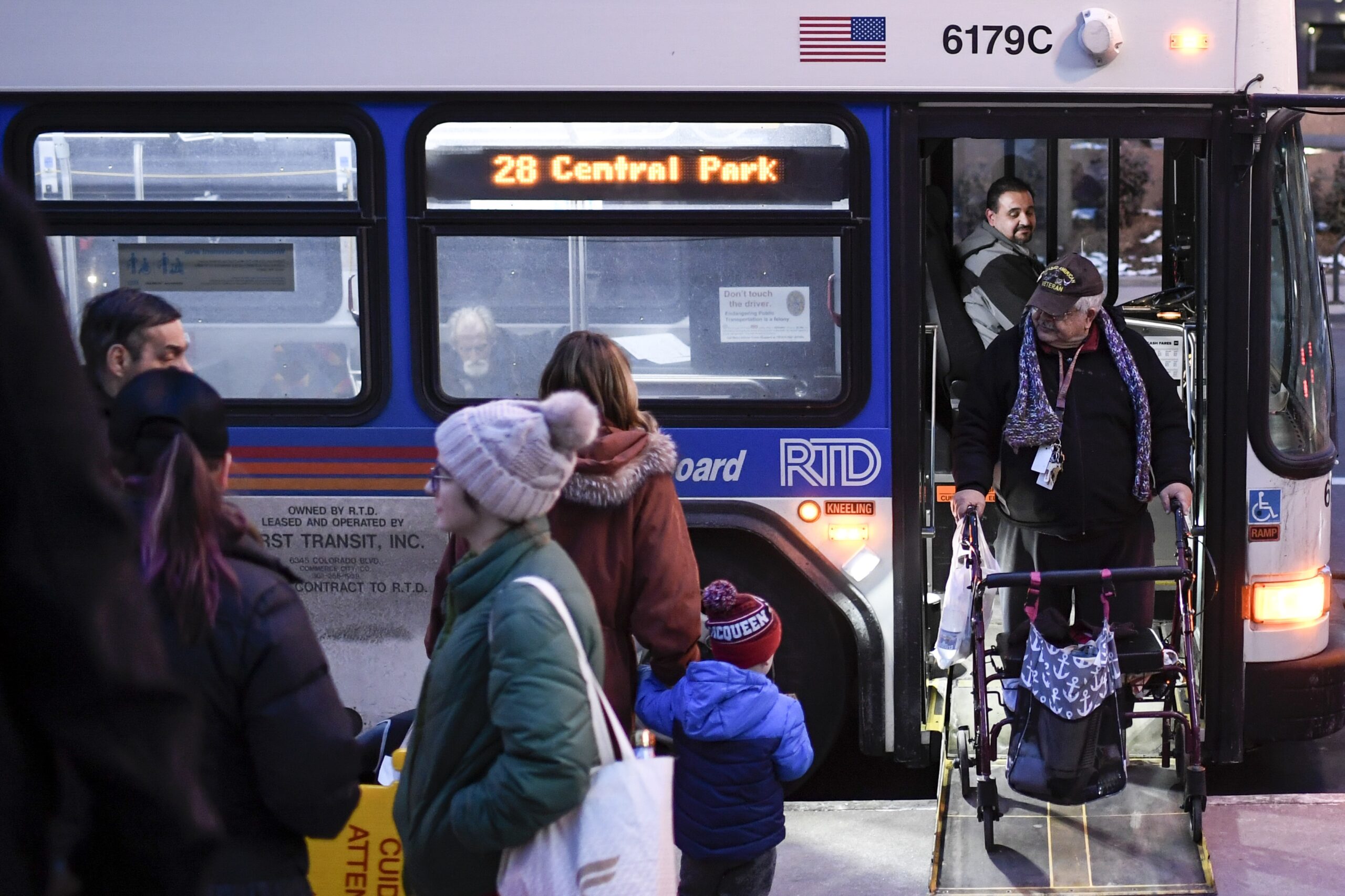
The Denver Streets Congress (DSC) brings together volunteer advocates and nonprofit, private, academic, and philanthropic sector leaders with professional and lived expertise, and a profound dedication to creating streets that support people’s health and accessibility in Denver.
The DSC convenes every other month, under the auspices of the Denver Streets Partnership (DSP), to share information, engage in dialogue, and identify opportunities for collaboration on topics relevant to reducing our city’s unsustainable dependence on cars and designing communities that put human and environmental well-being first.
To make this a reality, the DSC has developed policy recommendations for municipal officials and political candidates.
I. Act on Vision Zero
The alarming rate of preventable traffic-related deaths and injuries on Denver streets demands urgent action—a record 93 people were killed in 2025. Hundreds more were seriously injured, suffering life-altering trauma that often requires years of costly medical care and rehabilitation.
To achieve this morally necessary transformation of Denver’s mobility system, all government agencies must do their part and work together—and municipal officials must lead.
HOW? Read more
- Recommit Denver to the Vision Zero goal of eliminating traffic-related deaths and serious injuries by the year 2030, backed by street-safety interventions focused on the High Injury Network (HIN) and in Safety Focus Areas within Denver’s priority areas for transportation equity.
- Uphold our City’s shared values on a project-by-project basis as much as in broad plans, prioritizing Denver’s Vision Zero commitment “to make Denver streets safe for everyone–no matter where they live in the city, no matter their means, and no matter their choice to walk, roll, bike, drive, or take transit.”
- Partner with the Colorado Department of Transportation (CDOT), the Denver Regional Council of Governments (DRCOG), and the Regional Transportation District (RTD) to prevent traffic-related deaths by making bold investments in bus infrastructure and service reliability.
- Public transportation is an undervalued but highly effective Vision Zero strategy. Focusing transit investments on transit-priority corridors, many of which are on the HIN, also generates higher ridership levels, reduces our costly dependence on individual car ownership, and, most importantly, saves lives.
- Use low-cost, temporary design treatments to make rapid safety improvements throughout Denver, followed by permanent interventions as soon as possible.
- Pursue other cost-effective policy interventions that address unsafe road-user behaviors and prioritize public safety over unsafe traffic speeds on Denver streets.
- Implement and expand fully-automated traffic enforcement to prevent red-light running, unsafe traffic speeds, driving or parking in bus lanes, and blocking bicycle/accessibility lanes, plus other data-informed and equitable approaches to traffic enforcement on HIN roads.
- Direct the revenues into the City’s Transportation and Mobility Special Revenue Fund to reinvest in traffic-calming interventions in under-served communities.
- At a minimum, ban turns on red Downtown and along HIN roads.
- Permitting turns on red increases pedestrian crashes by 60% and bicycle/scooter crashes by 100%, because right-turning drivers are often looking left for a gap in traffic and don’t look for people walking, rolling, or cycling approaching from the right.
- Eliminate pedestrian “beg buttons” on the HIN and implement pedestrian recall with Leading Pedestrian Interval (LPI).
- At many intersections controlled by traffic signals, people walking, using a wheelchair or another mobility device, cycling, and/or scootering must push an often-inaccessible button to be given a WALK signal.
- Automated pedestrian cycles with an LPI provide more timely pedestrian indications and can help to ensure pedestrians of differing abilities have additional time to cross the street.
- Fully fund the buildout of complete mobility networks and services that will ensure walking, rolling, cycling, and taking transit are safe and practical ways to access essential services. At current funding levels, this buildout will take hundreds of years.
- Ensure the Transportation and Mobility Special Revenue Fund serves its originally intended purpose and supports rapid completion of the Vision Zero Action Plan, Safe Routes to School Action Plan, and Denver Moves Pedestrians & Trails, Bikes, and Transit plans.
- Ensure the office of Climate Action, Sustainability and Resiliency (CASR) allocates funding from the voter-approved Climate Protection Fund to clean, safe, and affordable ways to travel, including walking, biking, buses, and local transit.
- Ensure CASR strategies support mobility and land-use policy changes that reduce greenhouse gas emissions as originally intended.
- Protect and expand upon current funding levels for sustainable and public transportation in the municipal budget.
- Re-hire and fully fund Denver right-of-way enforcement staff.
- Look beyond the annual budget, and proactively partner with other agencies, including CDOT, DRCOG, and RTD, to aggressively pursue additional state and federal funding required to fully achieve Denver’s Vision Zero and mode-shift goals.
- Implement and expand fully-automated traffic enforcement to prevent red-light running, unsafe traffic speeds, driving or parking in bus lanes, and blocking bicycle/accessibility lanes, plus other data-informed and equitable approaches to traffic enforcement on HIN roads.
II. Give All Denverites a Real Choice in How They Get Around
The ability to move freely, affordably, and safely around our community is essential to the quality of life and access to opportunities for all Denverites. Today, too many of us are forced to own and maintain an expensive automobile to access essential services. Others feel they have no choice but to drive everywhere they go, even if they would prefer to walk, roll, bike, or take transit for some trips. More importantly, the lack of viable mobility options severely restricts freedom and mobility for the one-third of folks who cannot drive because of age, disability, or legal status, and/or cost. Denver’s current transportation system over-relies on cars and driving a private automobile, contributing to high rates of traffic fatalities and serious injuries, harmful transportation emissions, air and noise pollution, and making life more stressful and less affordable for all.
Municipal officials can support the ability of Denverites to thrive by transforming our mobility system to make public transit, walking, rolling, and biking safe, viable options for everyone.
HOW? Read more
Public transportation:
- Ensure the majority of Denverites live within walking/rolling distance of all-day, every-day frequent transit service that comes at least every 15 minutes or better.
- Buy up more frequent service from RTD on priority routes that connect high ridership areas with major regional destinations.
- Implement speed and reliability improvements such as transit signal priority and bus queue jump lanes.
- Install and maintain dignified bus stop amenities, including seating, lighting, and shelter for protection from the weather.
- Partner with CDOT, DRCOG, and RTD to continue building out the network of Bus Rapid Transit (BRT) corridors, while providing meaningful support to small businesses to minimize disruption during construction.
- Promote high-density, mixed-use development along priority transit corridors through upzoning.
- Partner with CDOT to deliver true BRT along Federal and Colorado boulevards by giving the bus its own lane without widening the roadway.
Other nondriver infrastructure:
- Ensure all Denverites live next to a connected, accessible, and well-maintained sidewalk/rollway.
- Expedite the buildout of the sidewalk network by bonding against the sidewalk fee, or using a similar financing mechanism, rather than using a “pay-as-you-go” approach that will take many decades to realize.
- Prioritize building and repairing sidewalks along High-Injury Network (HIN) roads and transit routes in historically disinvested communities, including NEST neighborhoods.
- Deliver designs from Complete Streets Guidelines, including traffic calming measures that have recently been piloted in Denver, like chicanes, lane-narrowings, two-way conversions, raised crosswalks, and other physical interventions designed to effectively address unsafe traffic speeds and reduce crossing distances for people walking, rolling, cycling or using a scooter/other mobility device.
- Ensure all Denverites live within a quarter mile of a safe, protected cycling/accessibility lane, and are able to access these lanes via a safe neighborhood street or path.
- Prioritize the buildout of a complete, fully connected “Core Network” of protected bike facilities that accommodate high volumes and varying speeds of cyclists and other micromobility-device users, including those using e-bikes, cargo bikes, and shared bicycles and scooters.
- Provide safe, direct bicycle/micromobility routes across Denver, connecting folks to essential destinations like grocery stores, schools, clinics, and job centers.
- Ensure full connectivity of the network by building safe bicyclist/scooterist crossings at major arterial roads.
- Install frequent diverters, speed humps/tables, and similar treatments to enforce low vehicular volumes and safe speeds on neighborhood bikeways that do not have protected/separated cycling/rolling infrastructure.
- Implement protected cycling/rolling facilities and below-the-curb micromobility corrals by default during annual street resurfacing.
- Continually evaluate and upgrade cycling/rolling facilities to guarantee they are considered safe by people of all ages and abilities, including those who are curious but concerned about using a bicycle or scooter for transportation.
- Ensure adequate maintenance of existing cycling/rolling facilities, including consistent removal of snow and other debris.
- Build secure public parking for bicycles and other mobility devices, including for cargo bicycles and bicycle trailers, scooters, and strollers, near essential destinations.
- Strategically locate on-street bicycle/scooter corrals to also support intersection daylighting and traffic calming.
III. Support the Department of Transportation and Infrastructure with project implementation
DOTI must have sufficient staff and official support to plan, design, and deliver projects in a timely manner.
HOW? Read more
Champion Denver’s adopted plans, like Blueprint Denver and Denver Moves Everyone, and avoid using political influence to water down individual projects to continue to prioritize convenience by car over people’s safety.
Support an efficient and timely public-engagement process so that community members are not asked to repeatedly show support for the same essential safe-streets design before a project is implemented.
Prohibit the use of public dollars to remove protective mobility infrastructure, revise final designs, and/or conduct studies about what’s already widely known and accepted by roadway-safety professionals.
Act with urgency to fund and implement projects that are consistent with citywide goals, followed by immediate evaluation and iterative improvements to ensure the projects are achieving their intended safety and mode-shift outcomes.
IV. Design Public Spaces for People
All community members deserve equitable access to our public spaces, including streets, parks, and transit stops. Everyone should feel safe and welcomed in these spaces. Since our streets make up our largest public space, municipal leaders should approach public-safety issues with compassion and dignity, in order to find solutions that support health equity and benefit all community members, and to create a truly safe, accessible, and livable Denver.
HOW? Read more
- Reallocate street space to prioritize public health and health equity over vehicular throughput and car parking.
- Ensure streets are welcoming, well lit, accessible, and comfortable for people to use year round by funding street trees, lighting and greenscapes, shade and benches at bus stops, and permanent public restrooms and water fountains.
- Fund Denver’s Support Team Assisted Response (STAR) and similar programs at a level commensurate with community needs.
- For people experiencing unsheltered homelessness, “streets are not a means to get home but are home itself.” Often, for these folks, “living along dangerous roadways may be a necessity due to displacement from residential and business neighborhoods.” Consequently, people experiencing homelessness are severely overrepresented in traffic fatalities.
- Work with community-based organizations and other government agencies to make decisions founded in compassion and human dignity while addressing the root causes of public-safety issues, including traffic crashes, rather than leading with enforcement and criminalization of people existing in public spaces.
V. Reject Wider Highways and Roadways
Doubling down on highway- and roadway-widening projects exacerbates the negative impacts of car dependency for people who live in the Denver metro region, especially for lower-income communities and communities of color who are most heavily impacted by traffic crashes, air and noise pollution, burdensome household transportation costs, and increased greenhouse gas emissions.
Municipal leaders must secure and invest mobility funding in projects that align with our commitments to address health equity, affordability, roadway safety, climate change, and air quality.
HOW? Read more
Reject proposals from state, regional, and local agencies that include widening roads and highways within Denver city limits.
Reject the Peña Boulevard roadway widening alternative, and push for a transit-first option.
Champion opportunities to reconnect communities divided by interstate and urban highway projects.
Proactively support high-priority opportunities, including proposed redesigns of the Colfax/Federal cloverleaf and the I-25/W 23rd Ave. and I-25/Speer Blvd. interchanges.
Secure opportunities to repurpose highway infrastructure to increase multimodal, sustainable mobility options, for example by converting general-purpose travel lanes into dedicated transit lanes.
VI. Invest in Housing, Parking Management, and Transit Oriented Development
People-friendly streets result not only from street designs that support walking, rolling, cycling, and high-frequency transit. Intentional land-use and development patterns make these mobility options accessible and practical ways for people to reach essential destinations. Moreover, the top-two of the most significant household expenses are housing and transportation.
The Intergovernmental Panel on Climate Change has found that urban densification is necessary to achieve low-carbon cities, mainly because more compact urban forms are the only ones compatible with frequent public transportation. Housing density and a diversity of land uses allow people to live closer to their daily needs, including schools, work places, grocery stores, clinics, libraries, and more. Without offering people access to a variety of housing options their families can afford, land-use policies force people to “drive until they qualify” (depending on age, disability status and other factors).
Municipal officials must develop and adopt land-use and transportation policies that center nondrivers, so that every person in Denver enjoys access to safe, accessible, and affordable mobility options.
HOW? Read more
Coordinate housing and transportation policies and investments to maximize the number of people who can live, study, and work in walkable, bikeable, and transit-rich communities.
Encourage mixed-use density in Downtown areas and near high-frequency transit stations of at least six stories, with additional height incentives for affordable housing.
Support office-to-residential conversions where appropriate.
Pursue more funding at the local, state, and federal levels for affordable housing, and other innovative housing solutions to match local dedicated revenues.
Approve the full set of recommendations under the Unlocking Housing Choices effort to legalize duplexes, triplexes, and more-plexes across the ~67% of residential Denver land where currently only single-unit housing can be built.
Implement parking-management strategies to more efficiently use available car parking, coordinate on- and off-street parking, and activate under-utilized car parking spaces with community-serving uses.
Implement parking maximums downtown.
Establish parking benefit districts in high-demand areas, using pricing to better manage the demand, and reinvest the parking revenues in local safety and mobility improvements.
Pursue tax reforms that incentivize transit-oriented development and discourage low-value uses, such as surface parking lots, of prime urban land.
Establish thoughtful strategies to prevent involuntary displacement of residents and businesses.
Explore measures like well-designed rent stabilization policies, social housing, density bonuses for subsidized units, and funding more rental-assistance and anti-eviction groups.
Ensure policy measures do not unduly depress residential and commercial development.
Expand commercial zoning within residential areas, including via Accessory Commercial Units, to allow for a mix of housing, jobs, retail, and other building types in our communities and create neighborhoods where daily needs and household-sustaining uses can be generally accessed via a short walk, roll, or transit trip.
- Incentivize builders to provide space for publicly accessible activities, such as coffee shops, convenience and grocery stores, third spaces, restaurants, and other destinations that support the transit environment and offer comfortable places to wait at key Transit-Oriented Development (TOD) sites, such as those within a block of train stations or bus-transfer facilities.