
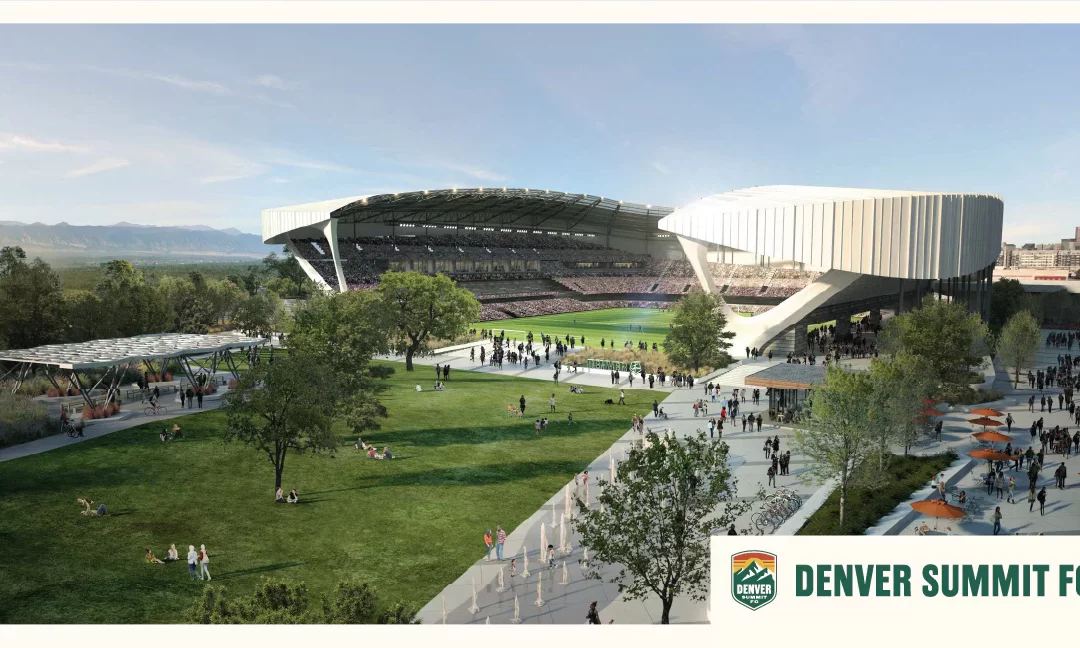
For years, the Santa Fe Yards site has been one of the largest missed opportunities in central Denver—a vacant, contaminated stretch of land that cuts off neighborhoods east and west of the rail corridor. Instead of acting as a connector, it has long functioned as a barrier.
Now, Denver has a chance to transform this gap in our urban fabric into something that genuinely serves the public: a walkable, transit-oriented district anchored by the proposed Denver Summit F.C. Stadium, the future home of Denver’s National Women’s Soccer League team.
As an organization committed to safer streets, better transit, and neighborhoods designed for people rather than cars, the Denver Streets Partnership believes this project represents a promising opportunity to make meaningful progress toward those goals—if the City ensures that public investment is targeted strategically and responsibly.
A Once-in-a-Generation Chance to Reconnect Neighborhoods
Santa Fe Yards sits at the center of Denver’s multimodal network: light rail, major bus routes, and key bike corridors all converge here. Redeveloping this long-neglected site would allow Denver to stitch neighborhoods back together and build the kind of walkable, transit-first community our city has been talking about for decades. Doing so would bring real benefits: cleaner air, safer streets, more affordable transportation options, and greater freedom of movement—especially for the one-third of Denver residents who don’t drive.
Why Redevelopment Here Matters
Some have suggested placing the new stadium in a suburban part of the region. But that approach would only deepen car dependency, encourage sprawl, and funnel more traffic onto already strained roads. Developing the stadium at Santa Fe Yards instead aligns directly with Denver’s climate, safety, and equity goals. This isn’t just about sports—it’s about building the kind of city we want to live in.
When Public Funding Works for the Public
Public investment can play a powerful role in unlocking sites like this one. It can help clean up contaminated land, build long-delayed infrastructure, and leverage additional private investment. But these dollars must be used wisely. To truly benefit Denver residents, public funds must be directed toward improvements that make it safer and easier for people to walk, bike, and take transit—not toward widening roads that put people in harm’s way.
That’s why we’re encouraged to see the proposed agreements identify a northern pedestrian bridge connecting the Broadway/I-25 RTD station directly to the stadium as an eligible use of site-generated tax revenue. This is exactly the kind of project that expands access without adding traffic or parking demand.
And When Public Funding Does More Harm Than Good
We are concerned, however, that widening Santa Fe Drive or Platte River Drive is still listed as a potential use of public funds. The Santa Fe–Mississippi intersection is already one of the most dangerous in Denver. Adding another traffic lane would mean people on foot or bike must cross seven lanes of fast-moving traffic—further entrenching this corridor as a barrier and increasing crash risk.
Expanding these roadways would directly contradict the City’s own commitments to safety and mode shift. Denver should not invest public dollars in projects that make the area more dangerous and less accessible.
A Vision Worth Fighting For
If public investment is carefully targeted—and paired with a strong Community Benefits Agreement—this redevelopment can turn a long-neglected lot into a vibrant, people-centered district that:
- strengthens Denver’s transit network,
- reduces car dependence,
- supports local businesses,
- reconnects divided neighborhoods, and
- delivers long-term community value.
This is a rare opportunity to transform a divisive stretch of land into a truly inclusive public asset. It’s a chance we shouldn’t squander.
Our Commitment
The Denver Streets Partnership and our coalition partners will continue advocating for a Santa Fe Yards redevelopment that prioritizes people over vehicles and uses public dollars to deliver real public benefits. We’re excited about what this project can become—and committed to ensuring it is done right.