
Transit
Reliable and affordable transit is a central component of a thriving city.
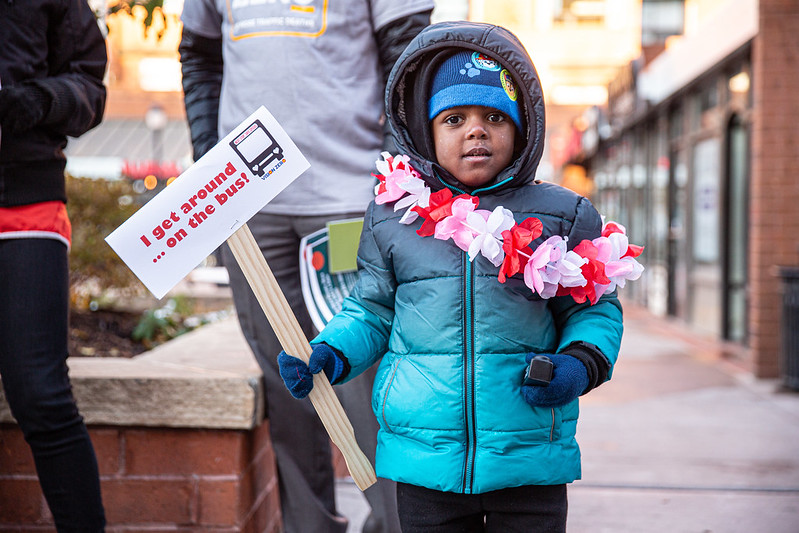
Traffic isn’t inevitable.
Denver is experiencing growing pains. We all know it’s true, often by personal experience. It doesn’t have to be this way.
Other cities chart the course
Seattle’s population increased 23% between 2006 and 2017 while daily traffic volumes declined by 5%. Like Denver, Seattle expanded its rail system during this period. Unlike Denver, Seattle also invested heavily in an extensive bus system and increased households within a 10-minute walk of frequent transit service by 40% in two years.
Quality public transportation makes cities affordable
A better bus system would bring a wide range of benefits to Denver residents. One major benefit is affordability. After housing, transportation is typically the second biggest household expense. The average vehicle costs more than $9,000 per year to own and operate, whereas the most expensive transit pass from RTD costs $2,400 per year, and many discounts are available. Denverites could save a lot of money if public transit made owning a car (or two) unnecessary.
Quality public transportation makes cities healthy
With Denver’s infamous brown cloud making a comeback and climate change an existential threat, it’s more important than ever that we have a reliable public transportation system. Zero-emission vehicles will help but getting more people out of cars is better. The more of us that ride the bus instead of drive, the easier we can all breathe.
Quality public transportation makes cities safe
Traffic fatalities and injuries in Denver have risen to the level of a public health crisis, with 70 people killed on Denver’s streets in 2019. Transit is one of the safest ways to get around and redesigning our streets to prioritize buses will make streets safer for everyone. By moving more people in a smaller amount of space, buses can help transform Denver’s most dangerous streets like Federal Boulevard and Colfax Avenue from car-centric highways to human-scaled main streets.
Here’s how we get there
More than 70% of Denver residents currently live within walking distance of transit, most within 1/4 mile from a bus stop. The reason most of us don’t use buses, however, is because they are not frequent, fast, or reliable. City leaders can significantly improve our existing bus system relatively quickly and inexpensively, as outlined in the new Denver Moves Transit Plan.
Bus-only lanes
Dedicating travel lanes for buses on priority transit streets only requires paint and signage — like the City implemented on Broadway in 2017 and in Downtown in 2019 — to increase the speed and reliability of service. Other simple changes such as traffic signal prioritization and “queue jump” lanes that allow buses to bypass cars at intersections can make taking the bus a fast and reliable option.
Increased Frequency
Denver should pay RTD to run existing buses more frequently on priority transit streets, ideally every 15 minutes or less from 6 a.m. to 10 p.m., seven days a week. Seattle did this, resulting in massive increases in ridership and reversing the death spiral of service cuts leading to ridership losses which lead to more service cuts.
Better Bus Stops
We need to stop treating bus riders like second-class citizens with bus stops hardly more than a stick in the mud beside a busy roadway. People riding the bus deserve a dignified place to wait with comfortable seating, ticket sale kiosks, and shelters that protect from the elements.
Easier Access
Everyone who rides the bus is a pedestrian at some point in their trip. The lack of sidewalks, crosswalks, and bike lanes at bus stops make transit less convenient and less safe. The City should commit to building out a complete network of sidewalks, which are currently missing or substandard on 40% of Denver’s streets.
Investment
Denver needs to find new revenue sources for improved bus facilities, service frequency, and pedestrian and bicycle connections. We have the plans and Denver has an existing bus network that can evolve into a high-functioning transit system. What we need now are City leaders who will implement proven solutions to manage growth and traffic, meaningfully address climate change, reduce traffic fatalities, and create a truly inclusive city by paying for a transportation system that works for everyone.
Transit projects

A Vision for Transit in the Denver Region
In partnership with our fellow members of the Alliance to Transform Transportation, we’ve released a Vision for Transit in the Denver Region, aimed at generating support for a significant increase in funding for transit operations over the next 10 years.
Transit Town Halls
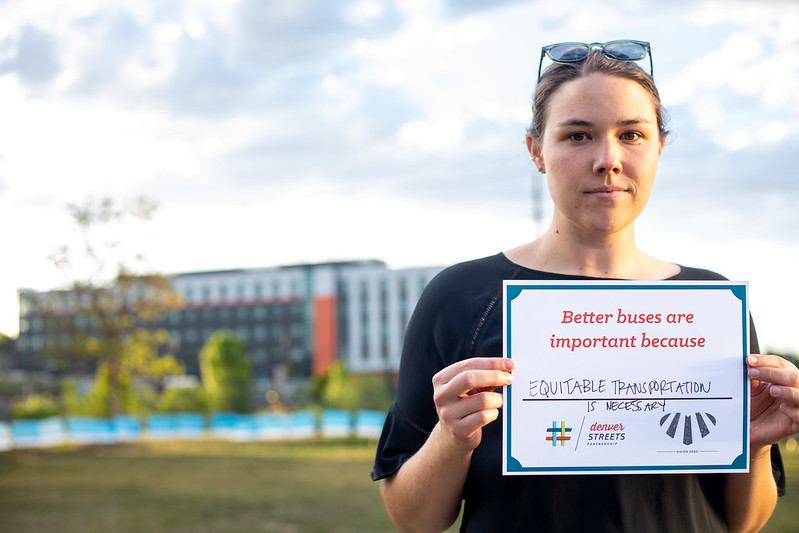
Help shape the future of transit in the Denver metro area: join a community town hall near you to share your experiences with RTD buses and trains, meet your RTD representative, and be part of the movement for faster, fairer, and more reliable service across the region.
Standing Up for Better Bus Stops in Denver
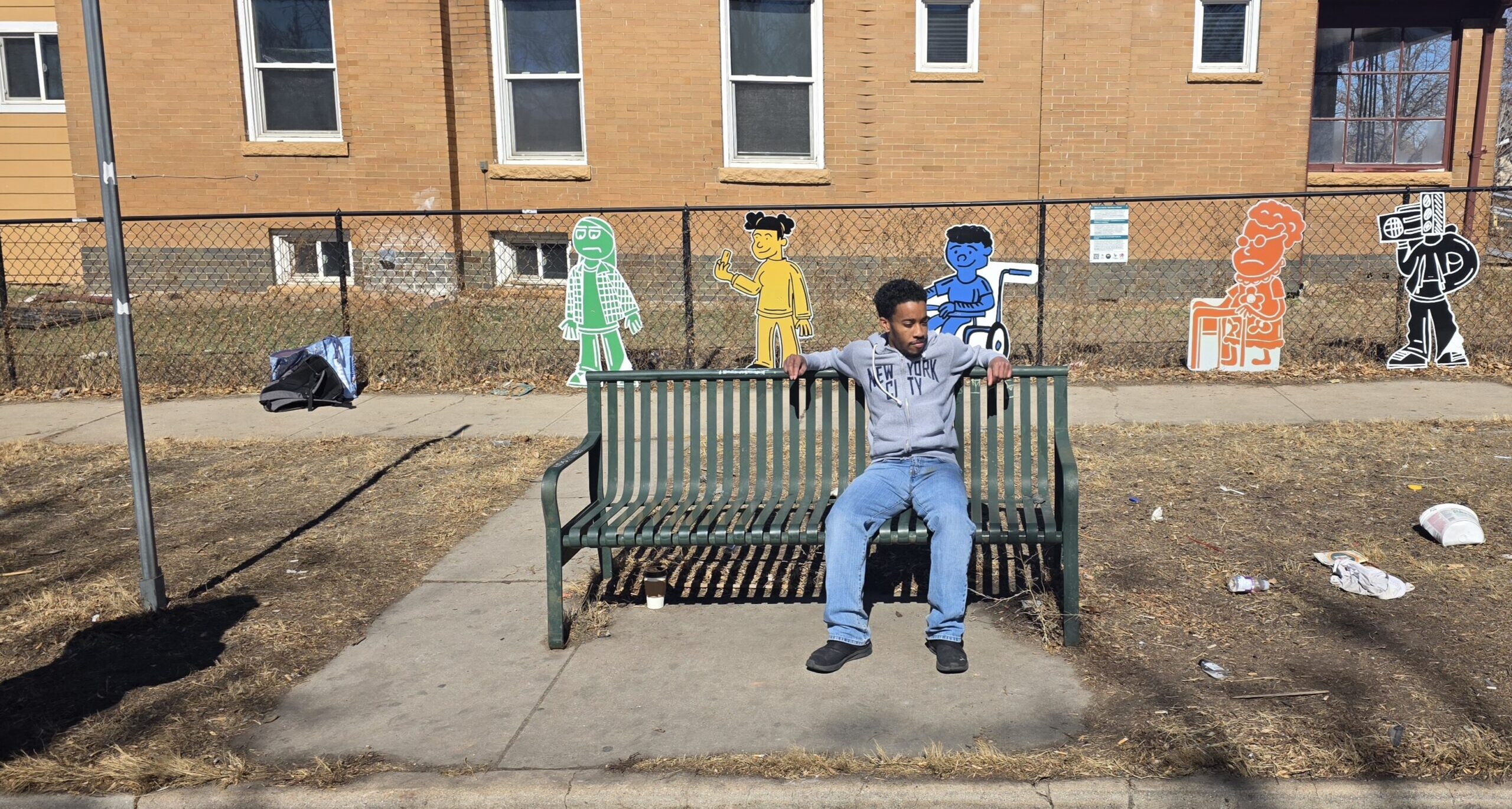
Waiting for Dignity was a a community-driven art project aimed at raising awareness about the poor conditions at many Denver bus stops—and advocating for real change.
Colorado Boulevard BRT
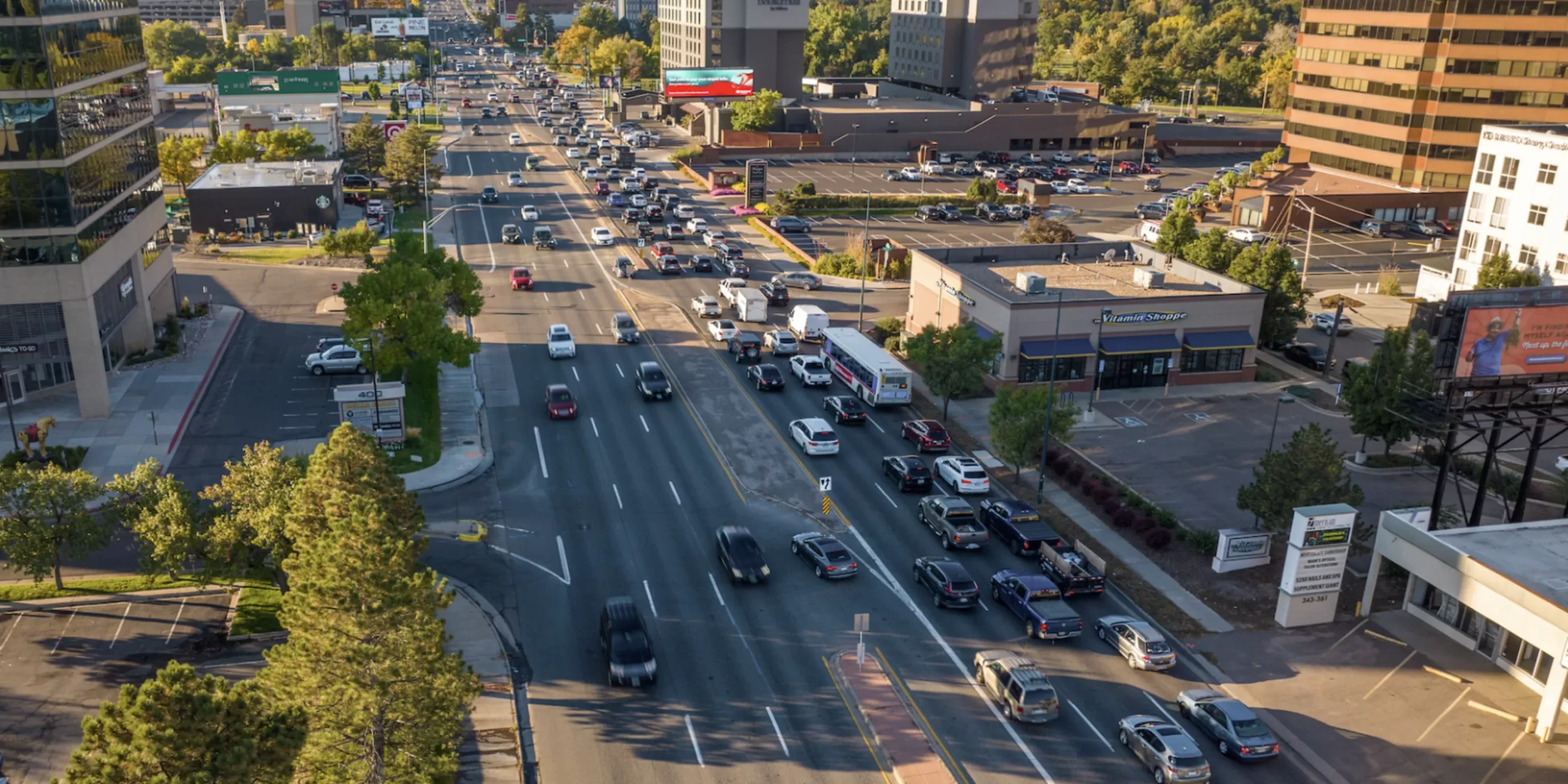
Colorado Blvd has so much culture and community, but it’s also one of Denver’s most dangerous, congested, and grungy corridors. The planned Bus Rapid Transit (BRT) project (like what’s coming to East Colfax) could transform it, but only if it’s done right.
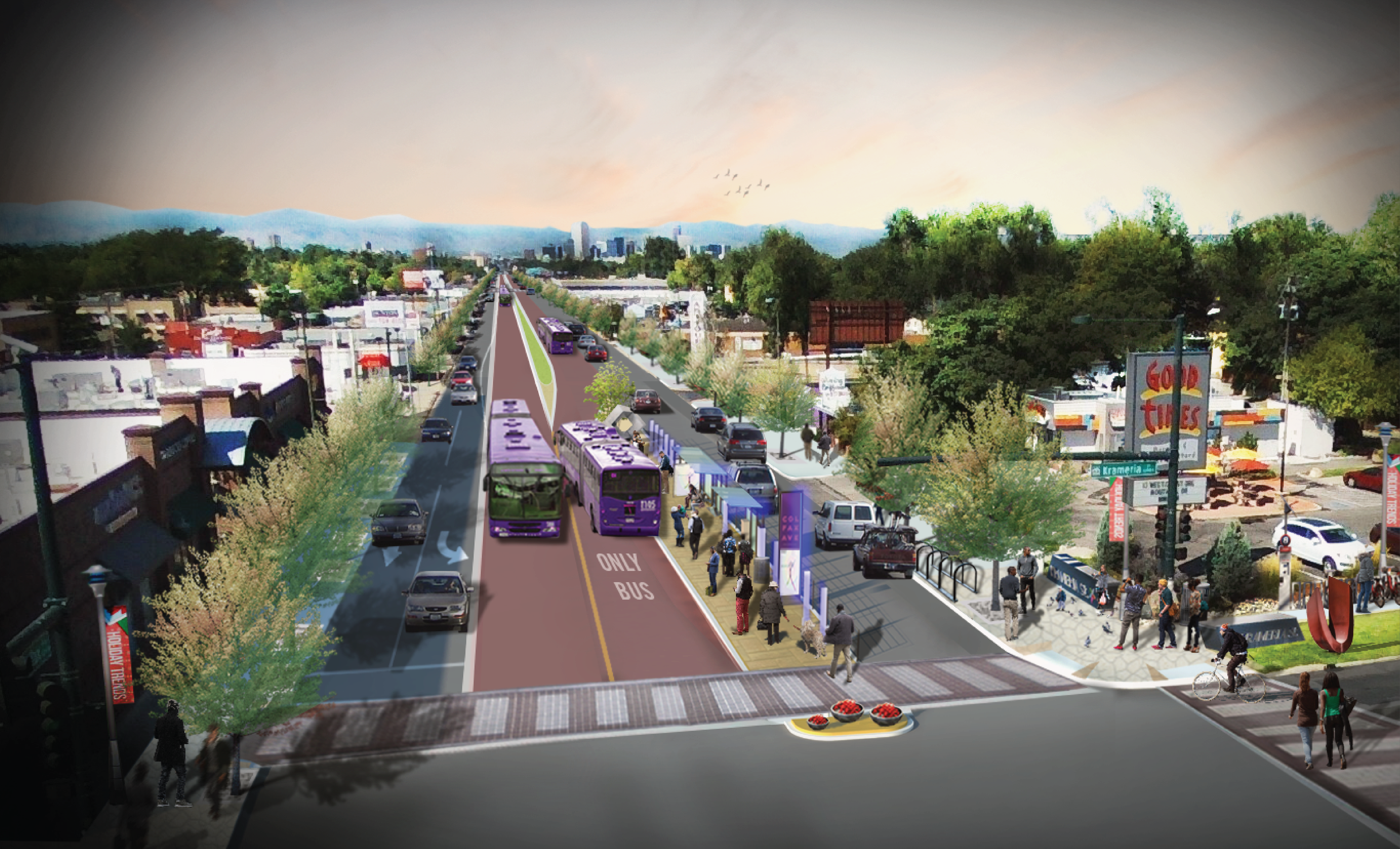
Guiding Principles for Colfax BRT
Bus Rapid Transit (BRT) on East Colfax is projected to bring a dramatic shift in how people move along the corridor. The project is an important opportunity to demonstrate how transformation of major arterials will help achieve Denver’s goals of reducing single-occupant vehicle mode share and eliminating traffic fatalities and serious injuries by 2030. With these goals in mind, we recommend ten guiding principles for implementation of BRT.
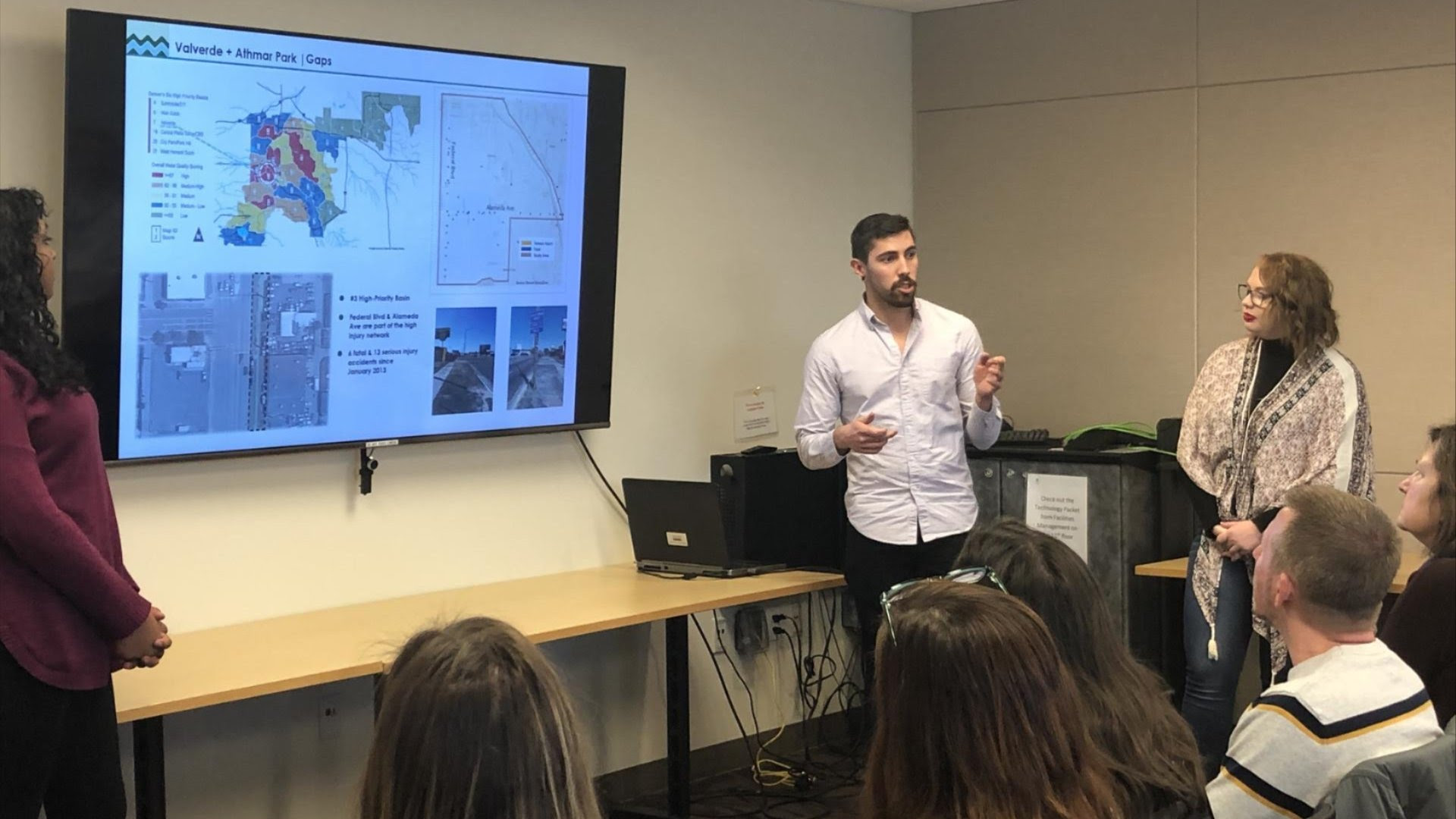
Federal Blvd Bus Stop Analysis
Many bus stops in the city lack even the most basic amenities such as seating, protection from the elements, and lighting. We recommend adding these amenities as short-term improvements that would enhance safety, comfort, and convenience for riders along RTD’s second-busiest corridor. On a long-term scale, we recommend much more substantial improvements to Federal’s roadway design and streetscape.
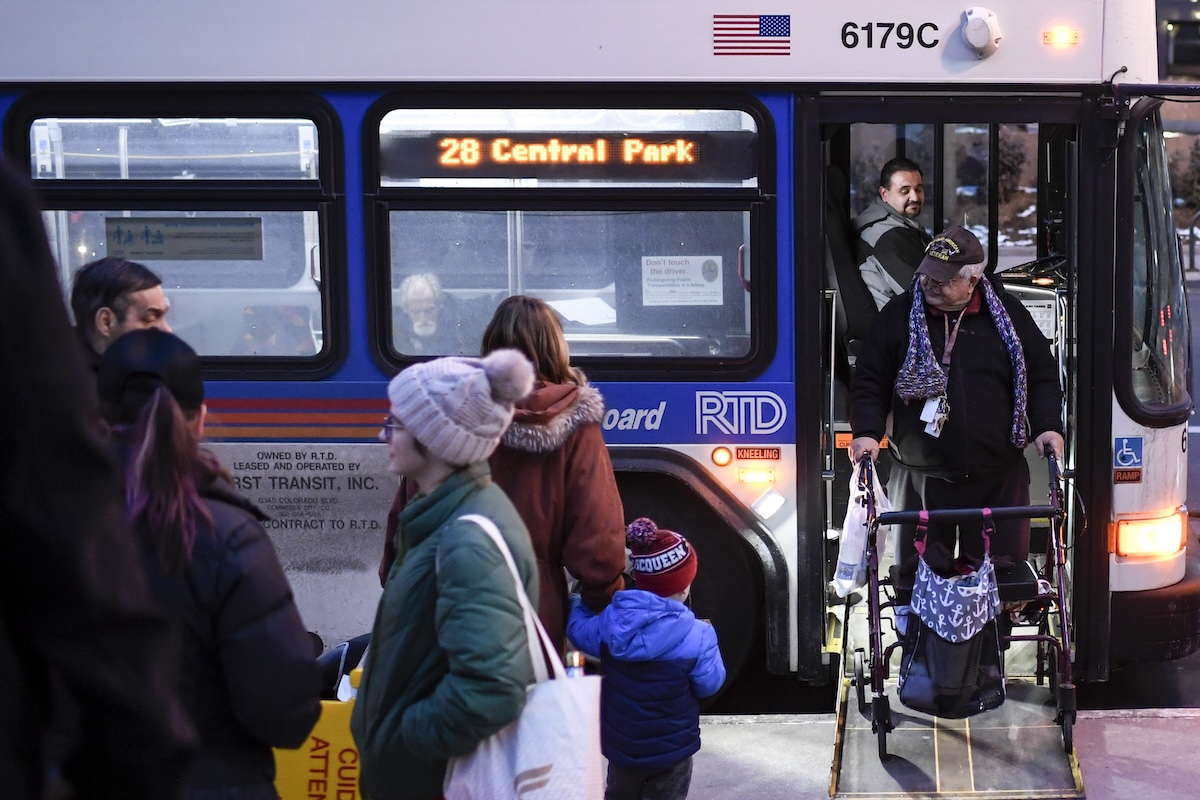
Transit is the Future: Denver Transit Justice Forum
In partnership with Mile High Connects, we hosted an exciting panel of transit riders and elected officials to discuss the importance of transit to the Denver metro region. Panelists included representatives from CDOT, RTD, the City and County of Denver, the AQCC, and more.
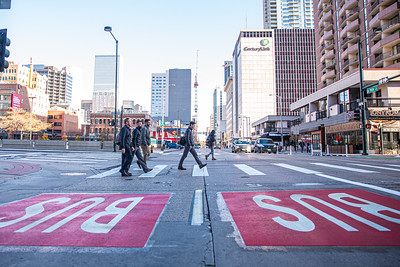
The Pokey Award underscores the need for dedicated bus lanes
We tested different transportation modes in Denver, sending six teams walking, biking, rolling, and riding from one end of downtown to the other during evening rush hour. Each team was assigned a different mode of travel and the champion would be bestowed a Pokey Award. But the goal wasn’t to win, because winning a Pokey Award means arriving last.
Related Resources
Bus Rapid Transit on Federal
A prominent north-south corridor, Federal Boulevard has some of the highest bus ridership in metro Denver. People get on the bus along Federal Boulevard 9,000 times every day in 2023. These riders, however, experience significant delays due to vehicle traffic, resulting in longer, inconsistent travel times—almost 50% more than delays experienced by people in cars.
PRESS RELEASE: RTD’s inability to provide shuttles during scheduled service disruptions proves that increased transit workforce recruitment and retention should be an immediate priority for local, regional, and state leaders
PRESS RELEASE — Tuesday, May 23, 2023 MEDIA CONTACT Molly McKinley, Policy Director, the Denver Streets Partnership molly@denverstreetspartnership.org | 919-588-9676 DENVER — Advocates at the Denver Streets Partnership are disappointed that RTD cannot provide bus shuttles this week during scheduled service disruptions due to maintenance on the D, H, and L Lines. “People in […]
DSP concerned about lack of bus rapid transit connections in Denver Moves Everyone Draft Short-Term Improvements
Dear Director Phipps, On behalf of the Denver Streets Partnership (DSP), we are writing to express our concerns about a major missed opportunity in the Denver Moves Everyone Draft Short-Term Improvements recently released for public comment . . .
PRESS RELEASE: At the end of RTD’s Zero Fare for Better Air initiative, groups launch a new effort, the Alliance to Transform Transportation
PRESS RELEASE — Wednesday, August 31, 2022 MEDIA CONTACT Danny Katz, Executive Director, Colorado Public Interest Research Group (CoPIRG) danny@copirg.org | 608-215-0929 Molly McKinley, Policy Director, the Denver Streets Partnership molly@denverstreetspartnership.org | 919-588-9676 DENVER — Today, after a month of free RTD transit, at a community event in Sun Valley, a group of organizations—made […]
Groups call for expanded transit, not expanded highways
Dear Executive Director Lew, Executive Director Rex, and Mayor Hancock, We are calling on CDOT, DRCOG, and the City and County of Denver to not add any new highway capacity or disrupt surrounding communities in the I-25 Central corridor, and to modify existing plans, including CDOT’s 10-year plan and DRCOG’s Regional Transportation Plan . . .
Denver Streets Partnership supports RTD’s System Optimization Plan
Dear CEO and General Manager Johnson, Board Chair Buzek, and Mr. Monroe, On behalf of the Denver Streets Partnership (DSP), we are writing to express our support for the RTD System Optimization Plan (SOP) . . .
PRESS RELEASE: New Report: Investments in public transit workforce needed to boost economic opportunity and racial equity
PRESS RELEASE — Friday, February 4, 2022 MEDIA CONTACT Molly McKinley, Policy Director, the Denver Streets Partnership molly@denverstreetspartnership.org | 919-588-9676 DRCOG approval of $40 million state/federal funding comes as CDOT advances implementation of climate pollution reduction rule DENVER — A new report released today by the Alliance for a Just Society, the Labor Network for […]
RTD prioritizes equity and current transit riders in their new System Optimization Plan
Denver’s Regional Transportation District (RTD) has to make some tough choices as they slice up a tiny pie of funding for transit in Denver. Funding and labor challenges, all reinforced by the impacts of the COVID-19 pandemic, put RTD in a tough position. We think the criteria they are using to evaluate trade-offs […]
Groups urge Denver and RTD to make decisions about Denver Union Station founded in compassion and dignity
Dear Mayor Hancock and CEO and General Manager Johnson, On behalf of the Denver Streets Partnership (DSP), Denver’s Task Force to Reimagine Policing and Public Safety, and the Harm Reduction Action Center we are writing in regard to your recent response to public safety issues at Denver Union Station to offer some concerns and recommendations, particularly as it relates to Denver’s population of unhoused individuals.
RTD 2022 Budget Comments
November 16, 2021 Dear CEO and General Manager Johnson, Board Chair Rivera-Malpiede, and RTD Board Members, On behalf of the Denver Streets Partnership (DSP), I am writing in regards to RTD’s proposed 2022 budget. DSP is a coalition of community groups advocating for people-friendly streets in Denver. The members of our coalition believe […]
CDOT, RTD, local partners must come together for better public transit
October 22, 2021 Governor Jared Polis 200 E. Colfax Avenue, Room 136 Denver, CO 80203 Executive Director Shoshana Lew Colorado Department of Transportation 2829 W. Howard Place Denver, CO 80204 CEO and General Manager Debra Johnson Regional Transportation District 1660 Blake Street Denver, CO 80202 Dear Governor Polis, Executive Director Lew, and General […]
On Earth Day, Colorado Mobility Advocates Call on Congress to Increase Funding for Public Transit
Dear Senators Bennett and Hickenlooper and Representatives DeGette, Perlmutter, Neguse, Bobert, Buck, Lamborn, and Crow: We are writing on behalf of the Denver Streets Partnership (DSP) to urge you to increase funding for public transit through Surface Transportation Reauthorization.