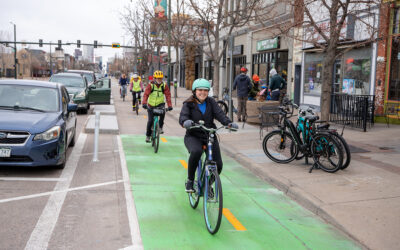
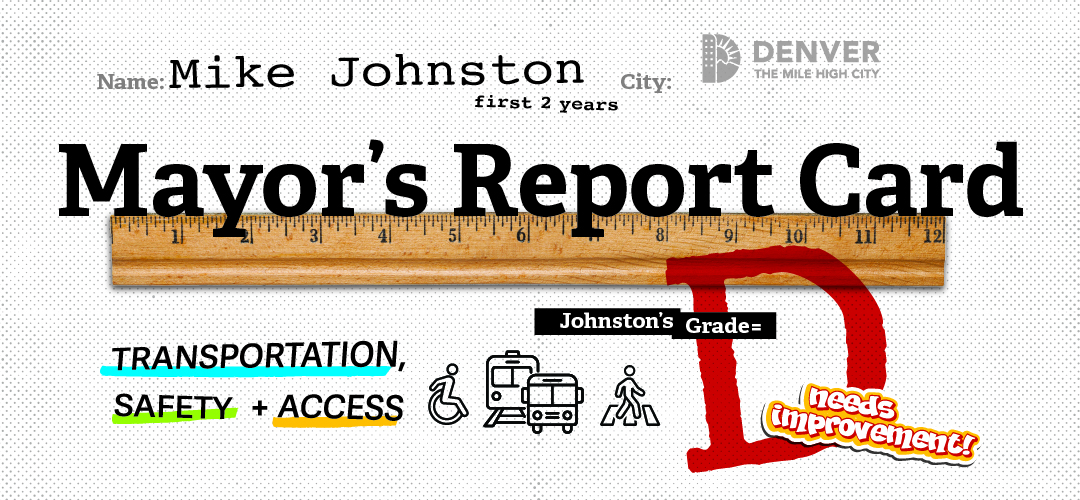
A coalition of community organizations and grassroots advocates today released a new Mayor’s Report Card evaluating Mayor Mike Johnston’s first two full years in office on transportation safety, access and mobility. The report assigns the Mayor a grade of D, citing rising traffic deaths, slowed implementation of road-safety projects, and the redirection of funding away from life-saving street infrastructure.
- Home
- /
- transit
transit
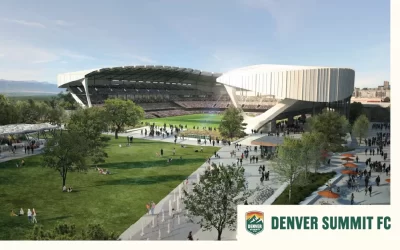
Why Denver should support the women’s soccer stadium at Santa Fe Yards — and why public investment must be done right
For years, the Santa Fe Yards site has been one of the largest missed opportunities in central Denver—a vacant, contaminated stretch of land that cuts off neighborhoods east and west of the rail corridor. Instead of acting as a connector, it has long functioned as a...
Why Denver voters should support measure 2A—and demand better from City leaders
This November, Denver voters will decide whether to approve the $950 million Vibrant Denver bond package (measures 2A–2E). These measures would fund infrastructure projects across the city in five categories — everything from parks and libraries to housing and...
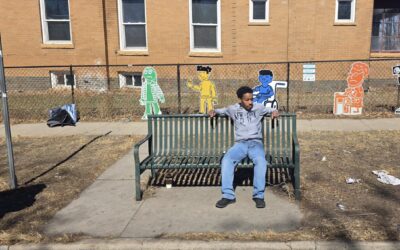
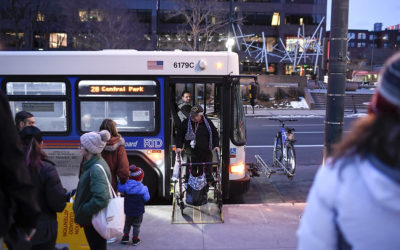
Stand up for better bus stops
Let’s make sure that all riders have the dignity and comfort they deserve while waiting for the bus.
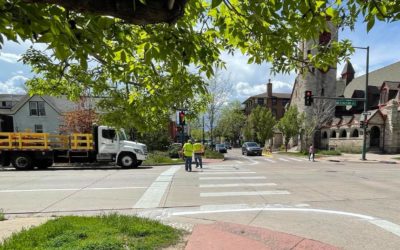
Eyes on the Street: The gradual transformation from deadly highway to people-friendly arterial
The most dangerous streets in Denver are major arterials, which are designed to move as many cars as fast as possible and are especially hazardous for anyone not in a motor vehicle. We can’t achieve Denver’s Vision Zero goal to eliminate traffic fatalities and serious injuries by 2030 without focusing attention on these streets, and the best way to make arterial streets safer while moving a lot of people is to prioritize transit.
Aligning our Transportation Goals and Spending
As Colorado legislators work to introduce a new transportation funding bill, transit continues to be deprioritized as highways look to receive the vast majority of funding. Denver has set ambitious long-term goals to reduce greenhouse gas emissions and the reliance on single-occupancy vehicles but the latest proposals actually work against these goals.
Meet RTD Board Member Shontel Lewis (virtually) on March 25 at Get on the Bus: Transit Justice Forum
What if RTD gets more federal funding? Shontel Lewis joins us March 25 to imagine the future of public transit in the Denver region.
Join us March 25 for Get on the Bus: Transit Justice Forum
Join us and Mile High Connects on March 25 as thought leaders, transit users, and decision makers discuss what’s possible with a significant amount of new funding for RTD.
What’s Next for Our Streets: Looking Ahead with DOT Leaders
National politics can limit or expand the ambition and scope of what’s possible on streets. Local transportation agencies must abide by federal rules to fund, develop, and construct new projects, and must allocate federal funding among infrastructure for cars, public...
Transit is the Future: Denver Transit Justice Forum
In partnership with Mile High Connects, the Denver Streets Partnership is excited to invite you on Wednesday, December 2 for “Transit is the Future: Denver Transit Justice Forum.”
Residents Support Lane Closures on Federal
We’ve long advocated for increased safety on Federal Boulevard, and are thankful that DPD and DOTI have installed temporary traffic calming. Read the story to hear from Athmar Park residents about the community’s response.
Denver: Stranded by Transit Cuts
Transit leaders at RTD and across the country have warned that service cuts of 40% may persist for years to come without federal funding.
Help Reimagine Transit in Denver
Transit is in trouble, across the U.S. and in Denver. During the COVID-19 pandemic, fare box revenues and dedicated taxes have plummeted, while transit agencies have had to shoulder new expenses associated with keeping riders and drivers safe, which in turn...