

Join us for 2026 National Week Without Driving
October 1–8, 2026 Make the pledgeDo the scavenger hunt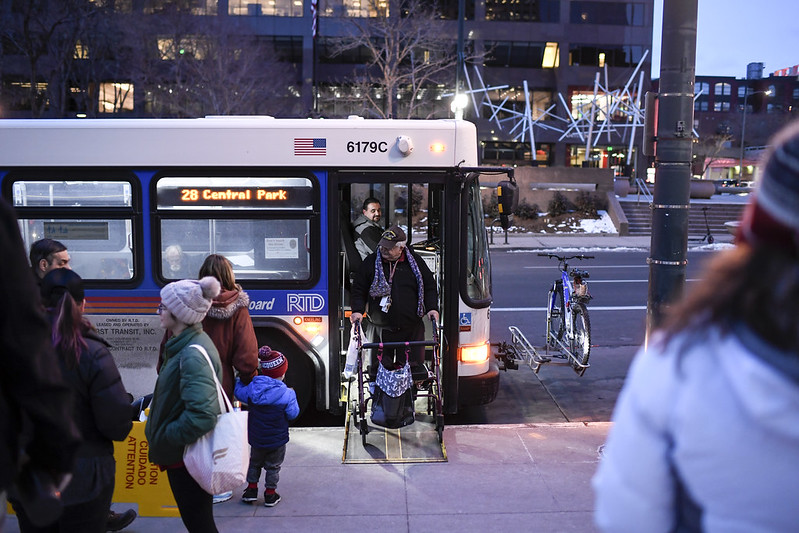
What if you couldn’t drive?
What if taking the bus, riding a bike, walking, rolling in a wheelchair, or asking for rides wasn’t a choice you could make, but a necessity?
What would it be like trying to get to your job, the grocery store, your kids’ school, medical appointments, and other essential destinations without the option to drive yourself?
As a public official, deeply understanding how limited or no access to a private vehicle impacts daily life is critical to equitably representing your constituents. Join the National Week Without Driving to better understand the real barriers your constituents face, and help build a safer, more accessible transportation system for everyone.
We’re asking public officials and candidates for office across Denver to participate in the National Week Without Driving (NWWD), October 1–8, 2026, to learn what it’s like to get around without driving. Take the challenge in solidarity with your constituents and neighbors who can’t rely on driving to go about their lives but still deserve a dignified and safe transportation experience. Join us in the joys and frustrations of a week without driving, so you can build empathy, identify barriers, and bring those insights into your leadership and decision-making.
Community members are also encouraged to join to better understand the potential and limitations of our current transportation system and to be better prepared to advocate for systemic change.
What does making the pledge entail?
First and foremost, don’t drive yourself anywhere for one whole week! This applies to all of your trips—not just your work commute. If you normally transport family or friends, it applies to those trips too.
For public officials and candidates, this is an opportunity to:
- Experience your district’s transportation system as many constituents do
- Identify gaps in safety, access, and reliability
- Reflect on how policy decisions impact daily mobility
Then join us on October 8 (Save the date!) for an Urbanist Happy Hour to reflect on your experiences and connect with others who participated.
Frequently asked questions
How can I plan ahead for NWWD?
Use the NWWD Resources to prepare for the challenge and guide your experience in Denver October 1–8, 2026.
Can I ride in other people’s cars?
Others may drive you, but make a note of these trips. If you ride-hail or use a taxi, think about how the cost would impact your decision to take that trip if it were your only option in a normal week.
What considerations should I reflect on and/or discuss with my community?
- If you ask a friend or family member for a ride, do you “owe” them for their time?
- If you get a ride from a friend or family member, do you feel obligated to support them in other ways, like doing the dishes?
- If you ride-hail or use a taxi, how would the cost impact your decision to take that trip if it were your only option?
- How can you relate to someone without the option to drive?
This isn’t a disability simulation or a test to see how easily you can find alternatives. We know it’s far easier to give up your keys if you can afford to live in a walkable area that is well-served by transit, or if you can outsource your driving and other transportation and delivery needs to others.
Having to drive during the challenge does not signify failure! The point of this week-long commitment is to consider how someone without the option to drive would cope and what choices they might make.
Make the pledge and lead by example
Your participation as a public official or candidate for office sends a powerful message to the community about the importance of safe, accessible transportation for all. Your participation as a community member shows how important this issue is to all of us.